How Parking Garage Signage and Wayfinding Shape the Visitor Experience
News & Insights
News & Insights

For many visitors, the parking garage is the true front door of a destination.
Whether arriving at a hospital, office, hotel, residential community, university, or mixed-use development, the parking garage is often the first space people experience. It sets expectations before someone ever steps into a lobby or walks through the front entrance.
Yet parking garages are frequently viewed as purely functional structures—places designed simply to store vehicles. As a result, they often receive less attention than other parts of a project.
That presents an opportunity.
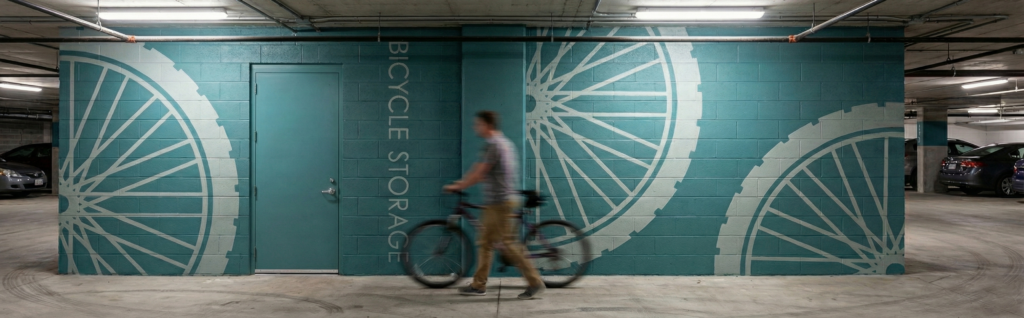
With thoughtful signage, wayfinding, and environmental graphics, parking garages can become intuitive, welcoming, and memorable parts of the overall visitor experience.


Parking garages are often one of the more budget-conscious portions of a project. Most are constructed with exposed concrete, standardized materials, and limited architectural finishes.
Fortunately, creating a better user experience does not always require significant construction costs.
Signage, graphics, color, lighting integration, and environmental branding can dramatically improve how a garage functions while representing a relatively modest investment within the overall project budget.
These elements help people orient themselves, reduce confusion, and create a stronger first impression long before they reach their destination.
The visitor experience rarely begins at the front desk. It begins when someone drives onto the property.
A healthcare patient may already be anxious before arriving. A hotel guest may be excited to begin a vacation. A prospective employee may be visiting for an interview. A resident may be returning home after work.

The parking garage establishes the tone for each of those experiences.
Thoughtfully integrated branding, environmental graphics, and architectural signage can transform what might otherwise feel like an anonymous concrete structure into an extension of the destination itself.
Rather than treating the garage as separate from the project, organizations can use it to reinforce identity, communicate quality, and create a more welcoming arrival experience.

Few environments present greater wayfinding challenges than parking garages.
Large floor plates, repetitive concrete construction, similar parking bays, and multiple circulation paths can make orientation surprisingly difficult. Visitors often struggle to answer basic questions:
Good parking garage wayfinding answers these questions before they become frustrations.


Successful systems combine intuitive naming or numbering strategies, clear directional signage, color coding, architectural landmarks, environmental graphics, and visual hierarchy to simplify decision-making at every step.
The goal is not simply to direct vehicles. It is to help people move confidently from their car to their destination—and back again.
Effective parking garage signage also contributes to a safer, more accessible environment.
Pedestrian routes should be easy to identify and separated clearly from vehicle circulation whenever possible. Accessible parking, elevators, emergency exits, and building entrances should be immediately recognizable.
Simple, legible signage benefits everyone, including first-time visitors, older adults, people with disabilities, and those navigating under stress or time constraints.
As with any successful wayfinding program, clarity reduces cognitive effort and helps people focus on why they came rather than how to find their way.
Increasingly, developers, healthcare systems, universities, hospitality properties, and corporate campuses recognize that every touchpoint contributes to brand perception.
The parking garage is no exception.
Color, typography, graphics, materials, messaging, and architectural integration all contribute to a cohesive arrival experience. When these elements align with the larger wayfinding and brand strategy, the garage feels intentionally connected to the destination rather than functioning as an isolated piece of infrastructure.


For stand-alone parking structures, thoughtful environmental graphics and identity can even establish a recognizable destination of their own while supporting community identity and civic pride.
At Altitude Design Office, we view parking garages as an important part of the overall user experience—not simply a place to park. If you’re planning a new garage or improving an existing one, we’d welcome the opportunity to discuss how thoughtful wayfinding, signage, and environmental graphics can create a better arrival experience.


