Many Angles, One Focus: Finding Perspective at the Brand New Conference
News & Insights
News & Insights
By Kevin Parker
After following the Brand New blog for years, this fall was my first time attending the Brand New Conference. The annual event is hosted in different cities each year and, this year, convened in Pittsburgh, PA—characterized by one speaker as a place with plenty of “graft”, the ethos of working hard to make something out of nothing—a perfect backdrop to a gathering of designers focused on the craft, purpose, and humanity of branding.
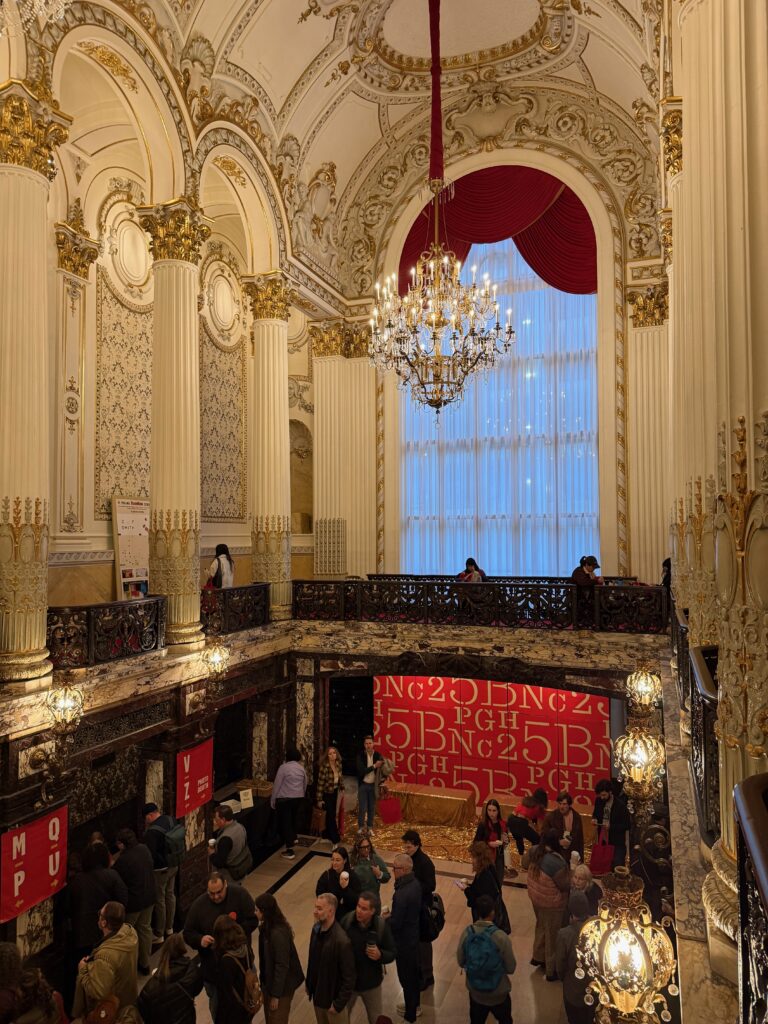
Across both conference days, the diversity of voices was striking. Participants came from all over the U.S. and around the world, representing a wide swath of the design industry.
Some of the most impactful talks came from speakers whose perspectives have been shaped by very different backgrounds and environments, both personally and professionally, in the world of brand design. For instance, Nada Hesham, an Egyptian designer at the head of a Cairo-based agency called 40MUSTAQEL, described the tension between her traditional German/Swiss design training and the work she’s now doing, which celebrates traditional Arabic scripts rather than avoiding them as she was taught. She combines this approach with references to mass-produced, cheaply-printed event posters found all over the streets of Cairo, for a result that’s innovative and thoroughly modern, while remaining rooted in her local environment.
Much closer to home, Dan Rugh — the owner of Commonwealth Press, a union screen-printing shop in Pittsburgh — recounted the story of someone throwing a brick through the window of his storefront, and his idea to auction off the brick to cover the cost of the repair, with the extra going to charity. Local media covered the auction, which led to a call from the Pittsburgh Steelers, and he now collaborates with the team on a poster series whose proceeds are donated to a local arts nonprofit. What it boiled down to, in his words: “People don’t buy what you do. They buy why you do it.”

Despite the vast differences of culture and background, it was notable how similar the focus was for both Nada and Dan in uplifting their communities, and it speaks to the best brand design having clarity of purpose that goes beyond products or logos.
Another great example of this came from Barrington Reeves, the founder of Too Gallus, a creative agency in Glasgow, Scotland. He told of the unsolicited advice he’s received over the years to tone down his personality to avoid scaring off clients—whether he’s late-night posting to social media from clubs during his DJ sets or openly criticizing the British government online. He’s disregarded this advice, and many (if not most) clients have sought out Too Gallus for this authenticity and expertise, opening doors that otherwise wouldn’t have been available to an agency of their size. A great reminder that humanity is the key ingredient to brands that people truly connect with.
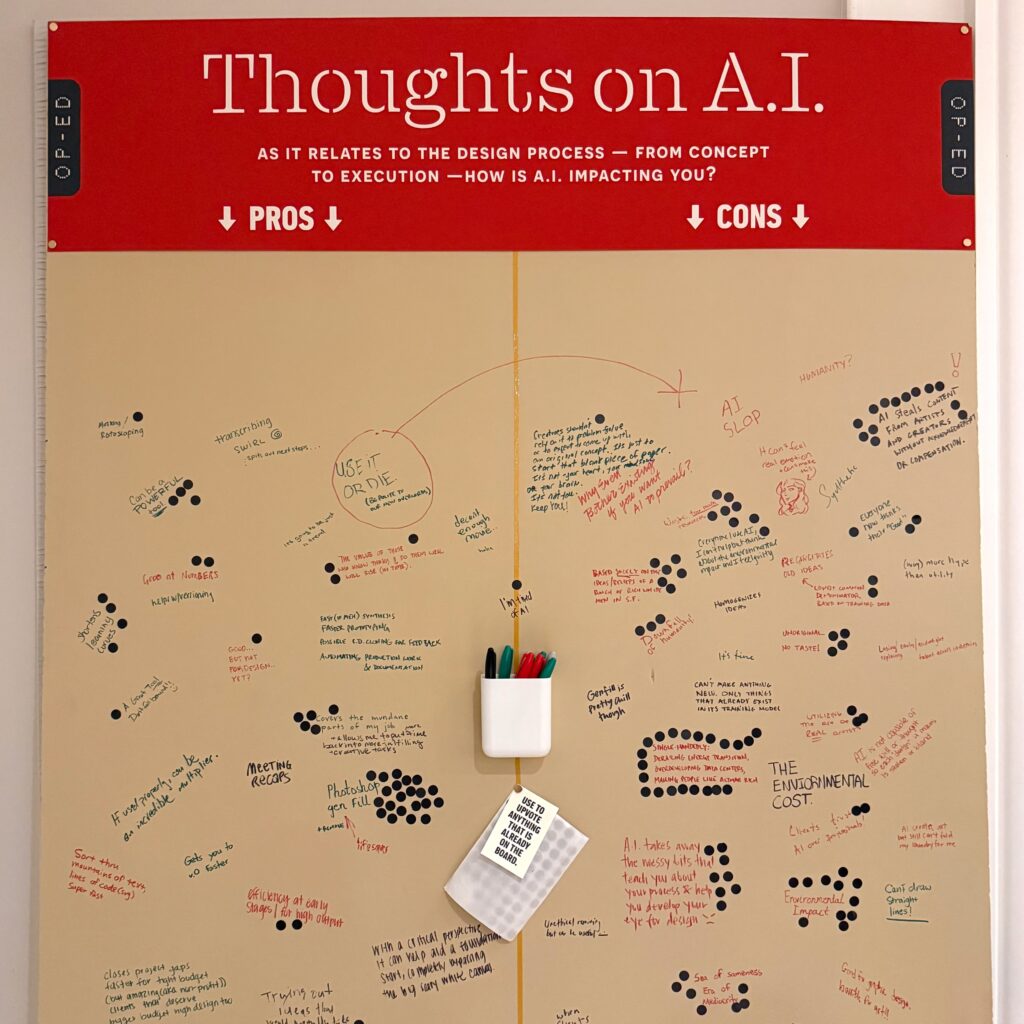
Unsurprisingly, a recurring topic throughout the conference was AI and its effects on the industry. It’s clear that many designers and firms are experimenting with AI and figuring out how it fits into their process, just as Altitude has been exploring. The consensus seemed to align with our experience, where AI is most useful as a tool that can supplement the design process, rather than replace it entirely. As with any tool, it’s only as valuable as the expertise and experience behind it.
Another consistent theme was how we as designers define success, both on the individual level and as studios. Again, the speakers brought a wide range of perspectives, often telling of the expectations that they initially tried to live up to, and how they’d moved beyond them after realizing that there’s no one-size-fits all definition of success. This resonated with our approach at Altitude, where the goal isn’t to become as large as possible, it’s to take advantage of our size to remain nimble, and create meaningful, bespoke, and highly personalized work for our clients.
Finally, one of my favorite parts of the conference was in the details. Every year, the event branding is custom-made by the founders of Brand New to align with the current host city. This year, in reference to Pittsburgh’s “Steel City” legacy, print collateral items like attendee badges and tote bags incorporated laser-cut steel plates, typography throughout the venue referred to the cross-section of an I-beam, and motion graphic intros for each speaker were accompanied by sampled metal clangs. These small details set the stage perfectly and underscored that it’s a conference rooted in care and craft.

I left Pittsburgh feeling energized and grateful for the time spent outside my day-to-day headspace. Since then, I’ve found myself thinking even more holistically about our projects, and how the process of creation shows up in the finished work—ideally with more cohesive, unique, and meaningful solutions.
Next year’s Brand New Conference will be in Nashville (conveniently, where my sister lives), so I’m already making plans. I look forward to connecting with designers from around the world and continuing to see the work we do with fresh eyes.


ABOUT THE AUTHOR: Kevin Parker leads the design of environmental graphics, branding, signage and placemaking projects for clients across the country. With more than ten years of experience, Kevin brings thoughtful design solutions to life as he works on projects from proposal to implementation, and from concept sketches to construction administration. He’s created imaginative and innovative environmental graphics and branding for a variety of places from commercial developments to residential communities, and for a wide range of applications from print and digital to physical space. He skillfully contributes his expertise in research, brand storytelling, illustration, hand lettering, data visualization, and photography to each project. Working closely with architects, designers and all project stakeholders, Kevin successfully collaborates across disciplines through each project phase to enhance and clarify the built environment, and to build positive relationships.


